
"regional growth"
5000 article(s) found

A brief introduction to the treatment method of grinding degree and baking degree of fine coffee beans in Feicui Manor, the king of performance-to-price ratio.
The BOQUETE region of Panama, located in the province of CHIRIQUI on the border with Costa Rica, is home to Panama's famous GEISHA coffee and is famous for producing high-quality Arabica coffee. Tedman & TEDMAN&MACINTYRE ESTATE Manor in the mountains 4000 feet above sea level in Poggett, originated in Panama

Regional varieties of Brazilian Bourbon Coffee beans produced by Flavor Grinding and Calibration
Brazilian Bourbon Coffee Bean characteristic Flavor Grinding scale treatment method Bourbon species is a branch of Arabica species, in addition to yellow bourbon, there are red bourbon, orange bourbon, etc. (in addition to Kaddura, Kaduai, etc.) among them, bourbon species were first planted in bourbon island and Ethiopia, and are suitable for the growth of bourbon-grown coffee beans at an altitude of about 800-1900 meters.

Introduction to the flavor description and grinding scale of Costa Rican coffee beans the method of regional treatment of varieties
Costa Rican coffee bean flavor description grinding scale variety treatment method the taste of the producing area is 9-1600 meters above sea level, 80% of which is located at 1000-1400 meters. This kind of coffee is famous for its excellent quality and rich and balanced taste. Even the coffee from Laminita Farm in the region is thought to have a flavor similar to Blue Mountain coffee. Costa Rican coffee is mostly washed with water.

Introduction to the varieties of coffee beans produced by grinding scale treatment in Panamanian jadeite manor
Panamanian coffee is famous for the rosy summer of the Emerald Manor, which is also famous in the Boquete region of its Chiriqui province. Poquet Boquete is a town of Chiriqui in the province of Riki. It is located near the border between Panama and Costa Rica, near the famous Baru Baru volcano.

Brief introduction of regional varieties produced by flavor description treatment of Kaddura coffee beans in Colombia
A brief introduction to the varieties of Kaddura coffee beans in Colombia with rich landforms, low latitudes and high elevations, Colombia has excellent conditions for the growth of boutique coffee. The Costa Rican coffee area, located between three and eight degrees north latitude, is a low-latitude coffee belt. It can be harvested twice a year, and ripe coffee can be harvested almost every month from south to north. Large-scale entrepreneurial coffee farmers
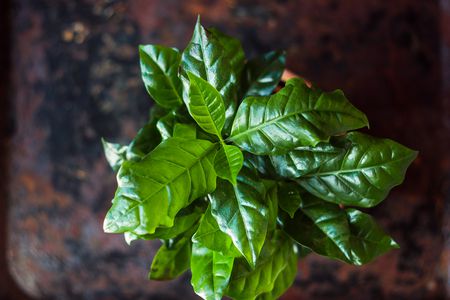
Areas and conditions suitable for growing coffee | how to grow Arabica coffee?
Professional coffee knowledge exchange more coffee bean information Please pay attention to the coffee workshop (Wechat official account cafe_style) Coffee planting areas and conditions since the coffee-producing countries we often come into contact with are tropical and subtropical climates between the Tropic of Cancer and Cancer, some people may take it for granted that coffee grows in the high temperature tropics, but in fact, coffee is usually planted.

Cultivation of Chaoyue Cup washed Fine Coffee beans in Cauca, Colombia geographical location, climate, altitude is simple
Variety: Kaddura batch: selected micro-batch flavor: nut, dark chocolate, caramel the biggest difference in climate between Coca and other producing areas is probably the relatively large temperature difference, the daily average temperature is 11 ℃, and the daytime average temperature is 18 ℃, the temperature difference between day and night is an important factor that constitutes high-quality coffee. The low temperature at night and the relatively higher altitude slow down the growth rhythm of coffee.

A brief description of the regional flavor of Costa Rican St. Roman coffee beans with good acidity and sweetness
The drop in Costa Rica's famous Tarasu high altitude causes sufficient rainfall, which is also good for the growth of coffee trees. However, although growing coffee at higher elevations has many advantages, the additional transportation costs must be taken into account, which is likely to make the production of coffee unprofitable. Although the development of boutique coffee started late, but now Costa Rica

Smooth, rich Hawaiian coffee flavor description Grind characteristics Variety processing Introduction
Unfortunately for coffee fans, only about 1400 hectares produce Kona coffee. And because of Hawaii's high income levels and high tourist numbers, Kona coffee is so expensive that even konablend (less than 5% kona) is sold. In recent years, neighboring islands such as maui, kauai, milokai,

Coffee growth knowledge
Coffee is a kind of drink, which gives the public the impression that it is black, bitter, sleepless and excited. The coffee beans we see in the coffee shop are tea-brown, which belongs to roasted coffee beans, while the color of the coffee liquid is amber. Coffee comes from coffee beans, which are harvested and processed from the fruit of trees. The growth habit of coffee: coffee

Introduction to the Regional Flavor description of Grinding scale production of Rosa Coffee Bean in Panamanian Jadeite Manor
Panamanian Jade Manor Rose Summer Coffee Bean Variety characteristics Grinding scale production area Flavor description Panamanian Rosa growing at an altitude of 1500-1650 meters, the unique growth environment makes it unique: dry aroma: tea, flowers (magnolia, tulips) vanilla plants, milk, black sugar sweet, high-grade champagne and aroma up. Wet fragrance: apricot, caramel, milk, flower. Sipping

A brief introduction to the market price of boutique coffee beans in the bright and sour Panamanian jadeite manor
According to the information obtained, due to the historical reasons of the manor, in order to pursue yield at that time, the early Rosa varieties were mixed with the coffee trees of Kaddura and Kaduai, and in order to facilitate picking, coffee farmers did not reclassify them, but directly mixed the three varieties. After that, as Rosa rose to fame and the price soared, the treatment plant opened.

A brief introduction to the History and Culture of the Origin and Development of Fine Coffee beans in Jade Manor, the King of performance-to-Price ratio
The most important resource that makes Panamanian coffee unique is its microclimate. The east-west environment of the Republic of Panama converges cold air over 6500 feet through the Central Mountains, creating a variety of microclimates in the Boquete and Volcn Candela regions, making it a major producer of Panamanian coffee. These specialty coffees are located in the Balu volcanic area.
The basis for the development of soft power of China's coffee industry in the future-- it has a far-reaching impact on China's coffee industry.
China is one of the countries with the fastest growing coffee consumption in the world. The amount of coffee consumed in China is about 200 billion yuan. The average annual growth rate of consumption is 20 per cent, compared with the world average of 2 per cent for aquatic products. Yoshima Sakuro, director of Uashima Coffee in Japan, said that the potential of China's coffee market is huge, and the growth rate of coffee consumption is amazing. In the near future, China will be more than just tea.

Bright, lively and sour Panamanian jadeite manor boutique coffee bean cultivation, geographical location, climate and sea
What is more surprising is that on the basis of very excellent quality, the very people-friendly price of this coffee bean makes the performance-to-price ratio of this coffee bean. What is special about this coffee bean is that it is made up of three varieties, of which 40% are rosy summer varieties, giving this coffee a distinct rosy summer flavor. According to the information obtained after consulting, due to the historical reasons of the manor, in order to pursue property at that time

Introduction of Coffee Flavor description and Grinding scale varieties of Red-tailed Cuckoo in Hartmann Manor, Panama
Panamanian Hartman Manor Red-tailed Coffee Bean Flavor description Grinding scale Variety introduction Poquet in such a unique planting environment, naturally there will not be only the rose summer of emerald, the king of coffee, regardless of flavor, quality and value; but I think it is quite extravagant to drink rose summer every day, and even if there is no economic pressure, it is not like eating shark's fin and bear's paw every day.

The skills of planting and harvesting Coffee the growth status of coffee trees
The first people to drink coffee lived in Ethiopia. A drink called Buncham was found in the Arab scientific literature of 900-1000 AD, but it is not certain that it is coffee. These documents mainly record the scientific value of this bean called Buncham. In addition to introducing the protective effects of this drink on the stomach, organs and skin, the author also mentioned that it can make

Introduction to the regional treatment method for describing the flavor of coffee beans in Fenghuang Manor, Costa Rica
Costa Rica Fire Phoenix Manor Coffee Bean Flavor description Variety Regional treatment method this coffee producing place, various grades and types of coffee account for 1/3 of the global consumption, and occupy a place in the global coffee market. Although the natural disasters faced by Costa Rica are several times higher than those in other regions, it has enough acreage to make up for it. The coffee here

A brief introduction to the History and Culture of the Origin and Development of Panamanian Hartmann Fine Coffee beans
Today's Hartman Manor is a family business founded by Latip Hartman (son of Eloise) in 1940. In 1966 Latip married Dinola Sandy of Costa Rica. They have five sons, Latipa Jr., Alan, Alexander, Alice and Kelly. Each family member is responsible for the growth management, harvest treatment and manor visit of the coffee.

When does coffee bloom and what season results?
Although coffee was discovered in the Middle East, the coffee tree originated in a region of Africa now Ethiopia called Kaffa, from which coffee spread to Yemen, the Arabian Peninsula and Egypt, where coffee developed rapidly and quickly became popular in people's daily lives. By the 16th century, early traders were selling coffee in Europe.